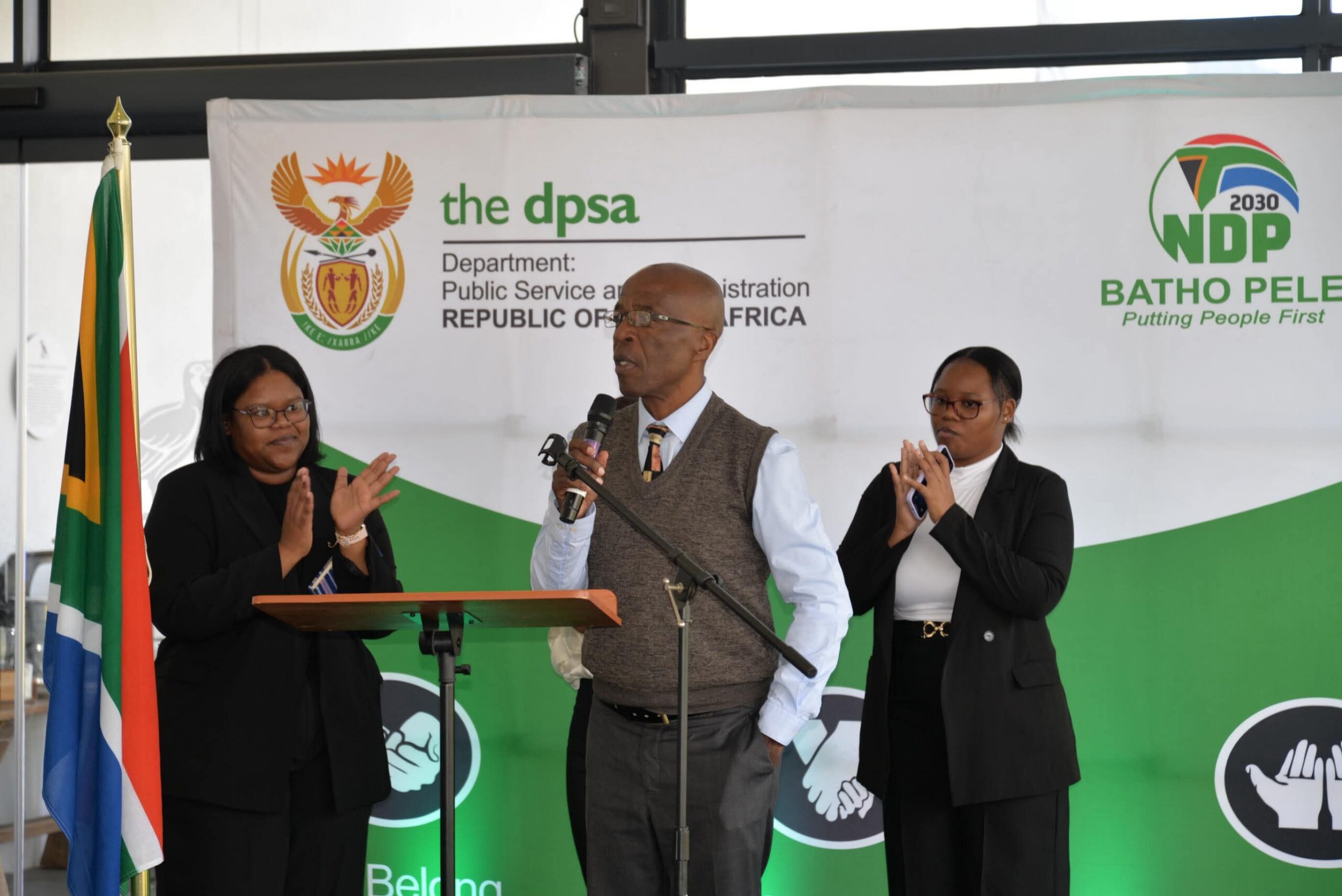
The African Association for Public Administration and Management (AAPAM) 10th Edition Research Seminar that seeks to translate commitments into action in governance, emphasizing on strong ethical leadership, kicked off on Wednesday, May 6, 2026, at Stellenbosch University in Cape Town.
The Department of Public Service and Administration (DPSA’s) Acting Deputy Director-General: Government Services Access and Improvement, Dr Patrick Sokhela, said “when the seminar wraps up on Thursday, participants will have cocreated both tangible deliverables and strategic commitments”.
Seminar outcomes
Dr Sokhela said participants at the seminar, organised through the partnership of the DPSA, the University of South Africa (Unisa) and AAPAM – a Non-Governmental Organisation (NGO) that was established in 1971 by the Heads of Public Service of Africa will strength a multi-sectoral resilience protocol.
He said this is where a collaborative model for disaster response that formalizes the roles of Higher Education and NGOs in supporting state institutions, ensuring that a coordinated “multi-stakeholder” approach service delivery would be developed.
Integrated Service Delivery Blueprints
Dr Sokhela said case studies and policy briefs that demonstrate how integrated public services can effectively reduce socio-economic inequality and quality service delivery is maintained even during periods of state fragility are shared and disseminated.
Professionalisation and Ethics Roadmap
A comprehensive set of recommendations for the professionalisation of public administration, including a “Leadership Integrity Code” aimed at uprooting corruption and fostering ethical leadership across all spheres of government.
Professionalisation and Ethics in Practice
A Peer-Learning Dialogue on Building Integrity Systems. A conversation among public service leaders, anti-corruption agencies, and professional bodies to exchange experiences on institutionalising ethics will be facilitated.
Technical Proposals for Data Integration
A set of actionable recommendations for integrating high-frequency, grassroots-level data into national reports to reduce the “paper-based” accountability gap.
e-Governance Implementation Strategy
The seminar will deliver a Strategic Framework for Digital Governance, providing a roadmap for integrating AI and Data Science into public administration.
Knowledge Repository and Seminar Communiqué
Publication of a formal Seminar Communiqué and a compendium of research papers that serve as a knowledge hub for African practitioners and policymakers seeking to translate governance theory into sustainable action.
According to Dr Sokhela, the primary objective of the seminar is to bridge the gap between continental governance commitments such as the African Union (AU) Agenda 2063 and the United Nation’s (UN) Sustainable Development Goals (SDGs) and their practical implementation at the local level.
He further indicated that the seminar also seeks to facilitate a collaborative platform for academics, practitioners, and civil society to develop actionable strategies that enhance state resilience, institutional integrity, and socio-economic justice across the African continent.
“Building on the successful precedents of previous editions and prioritizing the shift toward action-oriented governance, the 10th seminar employs an inclusive interdisciplinary, and highly interactive methodology.
“The 10th Edition Research Seminar builds upon the critical foundations established during the 9th Edition, which focused on the role of higher education and nongovernmental organisations in strengthening state resilience.
“The 9th seminar underscored the reality that while high-level commitments to AU Agenda 2063 and the UN SDGs exist, state capacity remains the primary hurdle to their realisation,” he said.
Dr Sokhela said participants at the seminar include public sector leadership and practitioners, academia and researchers, civil society and non-governmental organisations, diplomatic corps and international partners, oversight and accountability bodies, and the private sector.