The South African government is aware that Access to Justice remains a major challenge for the marginalised and vulnerable groups such as children, women and people living with disabilities.
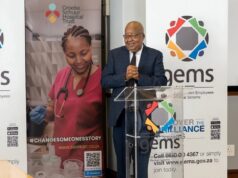
On Tuesday, May 5, 2026, Executive Mayor of Stellenbosch Local Municipality, Cllr (Ald) Jeremy Fasser walked through attendees at the second provincial launch of the Open Government Challenge (OGC) on why South Africa took a decision to participate in the initiative aimed at promoting access to justice to marginalised and vulnerable groups
“South Africa took to a decision to participate in the Open Government Challenge on Access to Justice to marginalised and vulnerable groups.”
“This decision was important because the government is aware that Access to Justice remains a major challenge in South Africa, particularly for the marginalised and vulnerable groups like children, women and people living with disabilities, despite the interventions made by the government,” he said.
Executive Mayor, Ald Fasser delivered the keynote address in Franschhoek, Cape Town on behalf of Public Service and Administration Minister, Inkosi Mzamo Buthelezi, who is South Africa’s Focal Point for the Open Government Partnership.
The Open Government Partnership (OGP)
According to Executive Mayor Ald Fasser, 15 years ago, South Africa endorsed the OGP Declaration of Principles by committing to work with civil society towards enhancing transparency, public participation, accountability, and the fight against corruption in both the public and private spheres.
As a result, South Africa is the founding member of the OGP together with Brazil, Indonesia, Mexico, Norway, Philippines, United Kingdom, and the United States, but as of October 2025, the OGP had grown to more than 76 OGP member countries.
He said that the OGP is based on the idea that an open government is more accessible, more responsive, and more accountable to its citizens, and that improving the relationship between people and their government has long-term, exponential benefits for everyone.
The Open Government Challenge
The Open Government Challenge (OGC) was launched in 2023 by the OGP Steering Committee as a call to action for all members of the OGP to raise ambition in ten policy areas of open government to help strengthen democracies.
The ten policy areas of open governance are: Access to Information, Anti-Corruption, Civic Space, Climate and Environment, Digital Governance, Fiscal Openness, Gender and Inclusion, Justice, Media Freedom, and Public Participation.
“The OGP experience is that countries around the world are facing a host of crises, and it’s through these hard times that countries see the power and potential of democracy and open governance.”
“When the government and civil society work together, the OGP experience is that more ambitious and impactful reforms transform our communities. Hence the reason why OGP launched the Open Government Challenge, and that is why we’re gathered here today to showcase that working together we can do more.”
“South Africa has one of the highest incidences of gender-based violence and femicide, which further puts a further strain on the same marginalised and vulnerable groups.
“Access to justice and empowerment of these groups thus becomes a critical element in combating the scourge of gender-based violence and femicide.
“The challenge of inequality and poverty in South Africa further exacerbates the challenges that are faced by the most vulnerable groups who are predominantly women, girls, children and people living with disabilities,” said Executive Mayor, Ald Fasser.
He further indicated that government is aiming to address these challenges through, among others, pro bono legal services accompanied by empowerment programmes for the marginalised and vulnerable groups.
“Which is why we have brought all our partners together, so that they can inform the communities about the programmes they provide to the communities to ameliorate these challenges.
“We also have the University of the Western Cape Law Clinic staff and students among us, who are already serving this farm community by offering pro bono legal services and associated empowerment programmes. We thus want to recognise their efforts and seek to enhance their collective endeavours,” he said.
The Department of Public Service and Administration (DPSA) Acting Deputy Director-General: Government Services Access and Improvement, Dr Patrick Sokhela, said the first objective of the Open Government Challenge was to convene a national gathering at the University of Pretoria last year, under the auspices of the OGP Focal Point, of all Universities based Law Clinics and related organisations.
Dr Sokhela said the national gathering adopted a Pledge that commits them to work together to render pro bono legal services and related empowerment programmes to marginalised and vulnerable groups.
He said this is done in a coordinated nationwide manner and thereby confront the challenge of gender-based violence and femicide in an impactful way, adding that the second idea was to take the programme to other provinces as part of implementing a National Programme of Action.
According to the Acting Deputy Director-General, this is done in collaboration with other government departments, the South African Universities Law Clinics Association (SAULCA) and Legal Aid South Africa to meaningfully confront the challenge of gender-based violence and femicide.