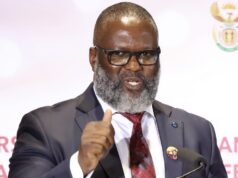
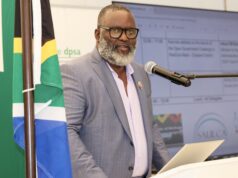
South Africa’s fight against corruption made significant progress at the Department of Public Service and Administration’s International Anti-Corruption Day event in Sandton, Johannesburg, where the Head of the Special Investigating Unit (SIU), Advocate Andy Mothibi, emphasised the increasing importance of citizen empowerment, cross-sector collaboration, and risk-based prevention.
Addressing delegates, Adv Mothibi emphasised that corruption cannot be tackled by government institutions alone. Rather, he said, the country’s success depends on an informed, vigilant public working alongside capable state entities and active civil-society organisations. His message aligned with the global theme of the day: strengthening ethical governance through shared responsibility.
Central to the SIU’s contribution was a closer look at the structures that now support South Africa’s anti-corruption framework. Adv Mothibi highlighted the network of Anti-Corruption Forums operating in high-risk sectors, such as health, local government, infrastructure, border management and others, where corruption is most likely to take root due to high transaction volumes, limited oversight and complex operational environments.
These forums bring together law enforcement agencies, government departments, regulators, labour formations, civil society organisations, academia, and private sector partners. Independent evaluations have confirmed the forums’ effectiveness and sustainability, with improvements in investigative turnaround times, prevention measures and sector-wide accountability. The Health Sector and Local Government forums, both assessed this year, were found to be “relevant, efficient and impactful.”
Adv Mothibi also pointed to recent progress made under South Africa’s 2025 G20 Presidency. Working through the G20 Anti-Corruption Working Group, the country advanced its commitments to improve public sector transparency, enhance asset recovery, increase multi-stakeholder participation, and strengthen global whistleblower protection. These priorities were deliberately aligned with the African Union’s Agenda 2063 and the Sustainable Development Goals.
A major development highlighted by Adv Mothibi was the drafting of the National Corruption Risk Management and Prevention Framework, designed to shift South Africa from a reactive posture to one centred on early detection and proactive intervention. The framework incorporates lifestyle audits, real-time auditing, data analytics, vetting enhancements and targeted awareness campaigns. It has undergone extensive consultation with civil society, academia, the private sector, international organisations and government institutions.
Adv Mothibi noted that the country’s anti-corruption strategy is increasingly anchored in the principle of active citizenry. Public participation, whistleblowing, transparency, and organisational integrity form part of the six pillars of the National Anti-Corruption Strategy. These pillars promote professionalisation, stronger oversight, improved procurement systems, coordination of anti-corruption agencies, and protection of vulnerable sectors.
Throughout the event, a consistent theme emerged: South Africa’s anti-corruption architecture is most effective when institutions and citizens work together. The SIU’s hotline, reporting mechanisms, collaborative forums, and public awareness programmes have been expanded to help citizens better understand how corruption occurs and how to report it safely.
Adv Mothibi’s message captured a growing national ethos, one that recognises that meaningful progress against corruption will require more than enforcement. It will require trust, transparency, cooperation and a commitment to ethical governance at every level of society.
As the country continues to rebuild institutions weakened by years of state capture and maladministration, Adv Mothibi’s contribution to the national discussion reinforced a simple but powerful truth: the fight against corruption is not only the responsibility of the state. It is a collective effort—one that belongs to all South Africans.