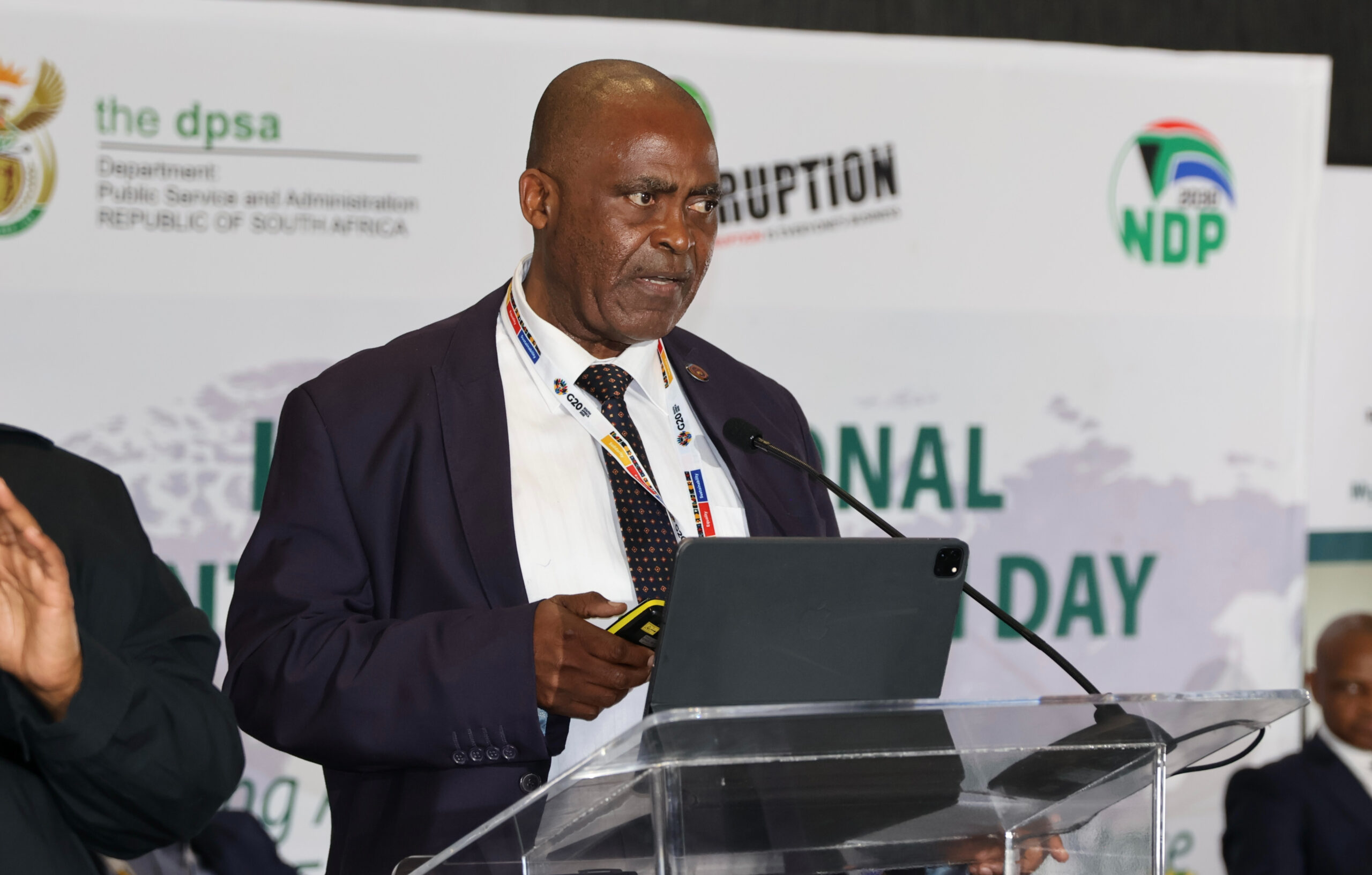
South Africa is sharpening its focus on transparency and accountability, driven by a growing recognition that ethical governance cannot be achieved solely by the state. Modern corruption networks are highly coordinated, technologically advanced, and global in nature, necessitating a unified response from governments, the private sector, civil society, financial institutions, and professional bodies. This was the central message delivered by the Acting National Head of the Directorate for Priority Crime Investigation and Chairperson of the National Priority Crime Operational Committee (NPCOC), Lt Gen Siphesihle Nkosi, during his address for International Anti-Corruption Day.
In his remarks, Lt. Gen. Nkosi highlighted South Africa’s exit from the Financial Action Task Force’s Grey List in October 2025 as a clear demonstration of what multisectoral collaboration can achieve. The accomplishment was not the work of a single institution but the coordinated effort of law enforcement, regulatory bodies, the financial sector, and various government departments. According to Lt. Gen Nkosi, this success has now been formalised into a sustainable governance model that emphasises collaboration rather than isolated enforcement.
Corruption in South Africa, as in many countries, has evolved into a digitised and transnational enterprise that relies on complex financial structures, professional enablers, and digital platforms. No single agency has the visibility or capability to tackle this threat on its own. The NPCOC’s revised approach, therefore, champions coordinated action, ensuring that expertise, intelligence, and ethical standards are shared across sectors. Public institutions continue to enforce the law and pursue prosecutions, while financial institutions contribute advanced analytics and monitoring systems to support these efforts. Civil society provides oversight and accountability, and professional bodies strengthen ethical conduct within their respective fields.
The NPCOC, operating under updated terms of reference, plays a central role in coordinating this networked approach to combating serious organised crime, serious commercial crime, and serious corruption. Its mandate includes ensuring alignment with international obligations, developing integrated strategies, and removing operational barriers that may hinder progress. This cooperative structure is designed to promote consistent ethical conduct across agencies and establish a unified national front against criminal threats.
South Africa’s recent successes already illustrate the value of this integrated model. The SAMLIT Fusion Centre, for example, enables banks and the DPCI to share financial intelligence in real-time, shifting enforcement efforts from low-level arrests to dismantling high-value criminal syndicates and freezing illicit assets. Similarly, the Joint Initiative on Crime and Corruption, established by the Presidency, structures the involvement of Business Against Crime South Africa in supporting state capacity without compromising law enforcement independence. These initiatives highlight how coordinated intelligence and shared resources enhance the country’s ability to respond effectively to corruption and financial crime.
Communities remain a vital part of this anti-corruption ecosystem. Multisector organisations have intensified their efforts to educate the public on ethics and
accountability, enhance accessibility to reporting channels, and strengthen integrity systems, including lifestyle audits, vetting processes, and polygraph testing. They also encourage the recognition of positive achievements, including successful clean audits in various municipalities, to promote a culture of integrity.
Lt. Gen. Nkosi noted that ethical governance is not a fixed destination, but a continuous practice that demands ongoing attention and cooperation. The progress made over the past year demonstrates that multisector collaboration is not only beneficial but also necessary for achieving a meaningful and lasting impact. He emphasised that business leaders, public servants, civil society groups, and citizens all have a role to play in building an ethical society.
Through the work of the NPCOC and its partners, South Africa is moving toward a governance model rooted in cooperation, integrity, and accountability.
“As the country reflects on International Anti-Corruption Day, collective action is the most effective tool in the fight against corruption, and a united commitment is key to building a future where integrity prevails,” Lt. Gen. Nkosi said.