The KwaZulu-Natal provincial government recently marked a historic milestone with the inaugural launch of a progressive capacity-building initiative aimed at strengthening strategic leadership within its Senior Management Service (SMS).
The Managing Change and Public Value Governance Programme (PVG) was held earlier this week at the Leadership and Management Development Provincial Public Service Training Academy in Durban.
The launch served as a platform to introduce the PVG as a necessary framework for building an accountable, responsive, and citizen-centred public service. The launch marks the beginning of a transformative journey for the province, one that places public value at the heart of governance and aims to build a more responsive, ethical, and citizen-centred government.
The initiative reflects the province’s growing commitment to modernising governance practices and ensuring that public sector leadership is better prepared to address the evolving needs of communities.
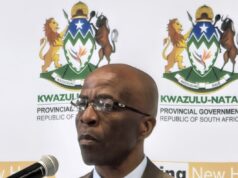
DPSA’s Acting Deputy Director General for Government Service Access Improvement (GSAI), Dr Patrick Sokhela, provided an in-depth facilitation on the role of the Open Government Partnership (OGP)and the African Peer Review Mechanism (APRM)as mechanisms that support and enhance PVG.
According to Dr Sokhela, both platforms offer valuable opportunities for promoting transparency, accountability, and collaborative governance. Drawing on international best practices and peer-reviewed standards, he explained how KZN can strengthen institutional performance and build public trust.
He urged participants to view these mechanisms not as compliance tools, but as strategic avenues for unlocking innovation and improving alignment between government actions and citizen expectations.
Dr Mary Mangai, senior lecturer at the University of Pretoria, facilitated a session on the theoretical perspectives of PVG.
She outlined the evolution of governance thinking, from traditional public administration to new public management and, ultimately, to the public value paradigm that is increasingly shaping global governance discourse.
Dr Mangai highlighted that PVG places citizens at the centre of decision-making, encouraging governments to co-create solutions with communities rather than delivering services through top-down approaches.
Her session helped participants to appreciate how PVG provides a useful lens for tackling complex social issues, fostering innovation, and strengthening collaborative partnerships within and outside the state.
Dr Ramona Baijnath, Director at the Gauteng Department of Infrastructure Development, facilitated a session on managing organisational change. She highlighted the importance of adaptive leadership in environments that are increasingly unpredictable and resource constrained.
Participants were also encouraged to recognise change, not as a disruption, but as an opportunity for institutional renewal.
Dr Baijnath provided practical strategies for leading transitions, cultivating resilient teams, and embedding new practices in ways that ensure long-term sustainability.
Her insights were particularly relevant as the KwaZulu-Natal provincial administration continues to introduce reforms aimed at improving efficiency and service delivery.
Reflecting on the strategic direction of the province, Ms Sally Reddy, a Training Advisor from the Leadership and Management Development Provincial Public Service Training Academy, emphasised that the KwaZulu-Natal provincial government has formally committed to pursuing PVG to enhance service delivery. She explained that this shift demonstrates the province’s intention to strengthen leadership capacity, foster innovation, and redefine the relationship between government and citizens.
Through PVG, the provincial administration aims to encourage greater collaboration across departments, improve accountability of structures, and ensure that public resources are directed toward initiatives that generate tangible value for communities.
Ms Reddy highlighted that the introduction of the programme signifies more than just training; it represents a strategic transformation journey. By equipping senior managers with knowledge of PVG and change-management practices, the province is laying the groundwork for a more citizen-focused public service.
She noted that this commitment aligns with national priorities for ethical, capable, and developmental state institutions. As the province’s SMS continue to engage with the programme, it is expected that participants will champion the principles of PVG within their departments.
This includes promoting transparency, promoting innovation, building stronger community partnerships, and leading change processes that support improved public service delivery. The programme also addressed a crucial dimension of leadership: the ability to manage and navigate change within government institutions.
The inaugural launch concluded with a clear message: strengthening governance requires continuous learning, strategic leadership, and a willingness to adopt new models of public administration that respond effectively to societal needs.