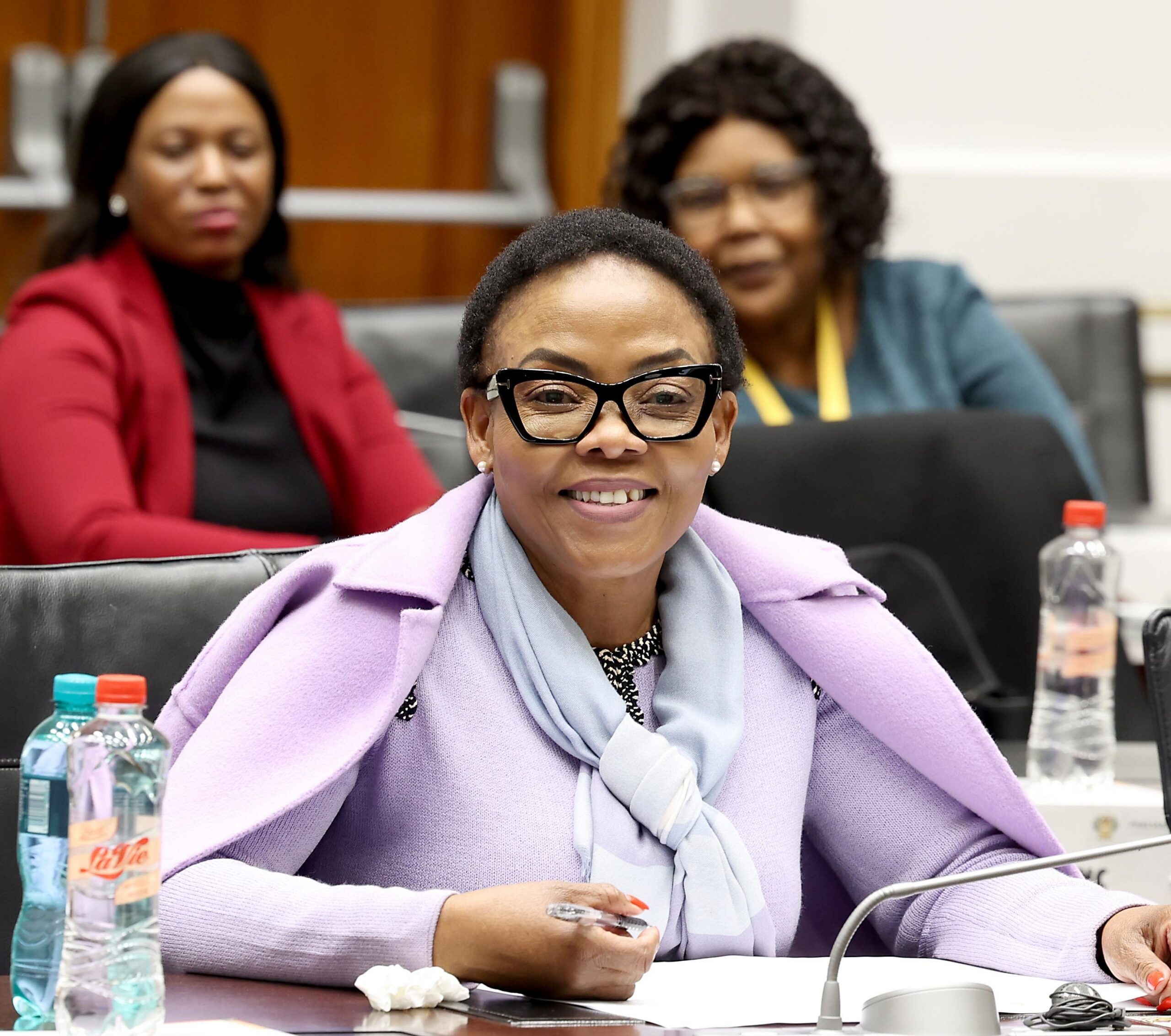
Public Service and Administration Deputy Minister, Ms Pinky Kekana urged South Africans not to turn a blind eye to domestic violence directed at women, children and the vulnerable during the festive season.
Speaking at the virtual platform of the departmental 16 Days of Activism for No Violence Against Women and Children, Deputy Minister Kekana said the festive season itself does not cause violence, but family violence rates increase during the festive season due to factors such as alcohol abuse.
“As we approach the festive season, we must also be honest about patterns… alcohol misuse, heightened tensions, economic stress and social gatherings too often coincide with spikes in violence.
“The festive season should not be an excuse; it is a warning light. I urge every one of us to be ambassadors of safety – in our homes, in our extended families, in our communities, in our public spaces. Celebrate responsibly. Intervene safely. Protect the vulnerable.
“We must also listen – to survivors, to community leaders, to civil society. Solutions must be co-designed with those who carry the burden of this violence. Consultation without action is cruelty in slow motion.
“Let us commit to a culture of measurable change. Targets, timelines, transparent reporting, and consequences for failure are not bureaucratic luxuries – they are tools to save lives. We cannot allow good intentions to become a cover for inertia.
“There is bravery in showing up for this work. It requires uncomfortable conversations, painful reforms, and persistent courage. But courage is contagious. Let us infect our workplaces and communities with it. Let us choose compassion over conflict. Let us choose dignity over dominance. Let us choose life, respect and humanity over violence,” she said.
According to the Deputy Minister, when public servants act with dignity, fairness and zero tolerance for abuse, they reset social norms.
“When leaders stay silent or look away, we send the opposite message. Let ourbehaviour be the benchmark for the nation we are trying to build.
“I call on every public servant here today: carry this commitment into your offices, your homes, and your conversations. Be the public servants the country needs – accountable, courageous and relentless in pursuit of safety for women and children,” she said.
The DPSA launched the 16 Days of Activism for No Violence Against Women and Children campaign last month on 25 November 2025, with a particular focus on domestic violence.
Deputy Minister Kekana said the reality facing the nation is that the fight against Gender-Based Violence and Femicide (GBVF) cannot be confined to a calendar, adding that it is a daily fight.
“For far too many of our sisters, mothers, daughters and even some of our nation’s sons – home is not refuge, but risk. The perpetrators are often people known and trusted: partners, relatives, neighbours, colleagues.
“That reality strips away the illusion that violence is somebody else’s problem. It is our problem and our responsibility,” said adding that this year’s theme -“Letsema: Men, Women, Boys and Girls working together to end Gender-Based Violence and Femicide” summons an unvarnished truth that the nation cannot end the crisis if part of the population stands on the sidelines.
In her own words, Letsema calls for collective labour, shared responsibility, and the active reshaping of what it means to be a man in our society.
To the millions of decent men who reject violence she said: “we need you not only to say, “not in my name,” but to say, “not on my watch…silence is not neutrality – silence is complicity…speak up, intervene. Teach your brothers, sons and your ‘boys,”
To public servants, her message was clear: “your role is unique, and your duty is clear. When the President (Cyril Ramaphosa) declared GBVF a national disaster, he put a spotlight on the scale of harm and on our obligation to respond with the resources, resolve and coordination that a national disaster demands.
“That declaration must mean more than symbolism – it must translate into relentless implementation, measurable outcomes and accountability.”
What public servants must do now:
- We already have the National Strategic Plan on GBVF – it’s implementation must be prioritised across government and in our workplaces. No partial roll-out. No excuses.
- Make survivor-centred services real: accessible, well-resourced, trauma-informed and sustained. A plan on paper is no substitute for timely, compassionate care.
- Ensure perpetrators face swift, certain consequences. Justice delayed is justice denied. Our systems – criminal justice, social services, employers – must act with speed and integrity. Communities must hold us accountable.
- Scale prevention programmes that engage men, boys, traditional and religious leaders, and communities. Prevention must be visible and funded as response.
- Protect the most vulnerable – women with disabilities, young women, LGBTQIA+ persons, migrant women, those living with HIV – through targeted, accountable interventions. Equality before the law must be matched by equity in access to protection.
- Strengthen ethics and discipline within the public service. We are custodians of the state’s moral authority. Abuse of power inside our institutions corrodes every effort to protect citizens outside them.