Public Service and Administration Minister, Inkosi Mzamo Buthelezi says the first-ever Pan-African Inter-Party Dialogue (PAIPD) Southern Africa conference is a turning point to drive good governance and decisive service delivery for the people of Southern Africa.
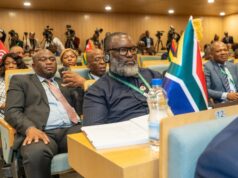
The two-day inaugural PAIPD conference kicked off today at the Kingdom of Lesotho’s capital, Maseru is attended by both ruling and opposition political parties alongside regional parliamentary bodies and the African Union (AU) partners.
“Our region does not need ego boosting titles and protocols. All it needs, is good governance, decisive service delivery and leaders who treat the public office as a mandate and not as a stage. Therefore, let us treat this Dialogue as a platform where the continent takes accountability. This moment does not require soft language; it is not for any political convenience. Instead, it must be a turning point and NOT a talking point.
“This moment must force us to confront the gaps, commit to reforms, and embody the democratic discipline our citizen’s demand. On behalf of South Africa, I affirm our solidarity with the African Peer Review Mechanism (APRM) collective resolve to build a region that is defined not by fragility, but by resilience, stability, and strategic foresight…building such region should start within political parties themselves,” he said.
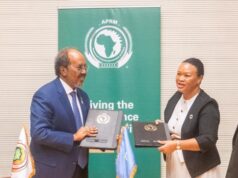
The APRM Continental Secretariat, in collaboration with African Union (AU) organs and strategic partners, has established the Pan-African Inter-Party Dialogue (PAIPD), an initiative that provides a neutral, non-partisan platform for structured dialogue between political parties and the APRM Network.
The platform enables them to strengthen their continental collaboration, institutional capacity through peer learning and sharing of best practices and reinforce their role as custodians of democratic culture.
According to Minister Buthelezi, the Southern African region is currently navigating a democratic environment that is marked by complexities, volatility, and a sharpened public scrutiny.
“Democracy in the Southern African region is under strain. We do not have the luxury of denying that the health of our democracy is fragile – and across our continent, the warning signs are clearly visible.
This conference convened under the theme: “Advancing Governance Through Strengthening Democratic Resilience for Early Warning and Conflict Prevention” matters – not only as an event where we tick boxes, but where we gather as a governance intervention check point. We [gathered to] reflect on the commitment to recalibrate how political parties behave, how institutions respond, and how democracies in Southern Africa prepare for the future,” he said.
The APRM Governance Barometer Reviews, reveal that public confidence in political institutions is steadily eroding, that there is also a decline in voter confidence and disengagement from youth.
“This consistent downward trend in public trust – calls for concern and immediate action because when political parties lose legitimacy, and when people stop trusting political parties – they stop trusting democracy-resulting in governance losing its anchor. That instability undermines everything from service delivery, long term policy planning to economic performance and stability.
“This instability, therefore, does not only become a political inconvenience but also a developmental risk,” he said.
Minister Buthelezi said governance systems that fail to leverage its population is slowly engineering its own stagnation. He said platforms like the PAIPD conference must deliver real, and measurable benefits for our Southern Africa people.
The Minister told the conference delegates that there must be stronger early-warning systems that anticipate and mitigate political crises, that there must also be enhanced party discipline and leadership accountability.
“There must be improved regional policy coherence as well as institutional discipline that safeguards democratic stability, job creation and long-term development. Our take home is that this Dialogue becomes strategic in ensuring that our political systems remain credible, robust, and aligned with continental commitments that strengthen national resilience.
“The leadership of the APRM – through this Peer-Review Methodology -has demonstrates what a disciplined governance looks like. Therefore, political parties must rise to match that level of responsibility and integrity,” he said.
Minister Buthelezi said the Southern African region is not struggling because it lacks frameworks or continental strategies, no it is struggling because of political party’s problems.
“We are struggling because these political parties are not fully aligned with the governance demands of a rapidly evolving world.
“If political parties fail to build institutional strength and if political leaders prioritise politics over governance – all systems will collapse, our development agendas will stall and instability shall fester. Our political landscape should cease to be a breeding ground for demagogues and opportunists, instead it must produce the calibre of leaders with integrity that our continent desperately needs,” said Minister Buthelezi.