This Public Service Month, the Minister for the Public Service and Administration, Hon. Inkosi Mzamo Buthelezi, has sent a clear message to the people who keep government working: you are seen, you are valued, and you are honoured.
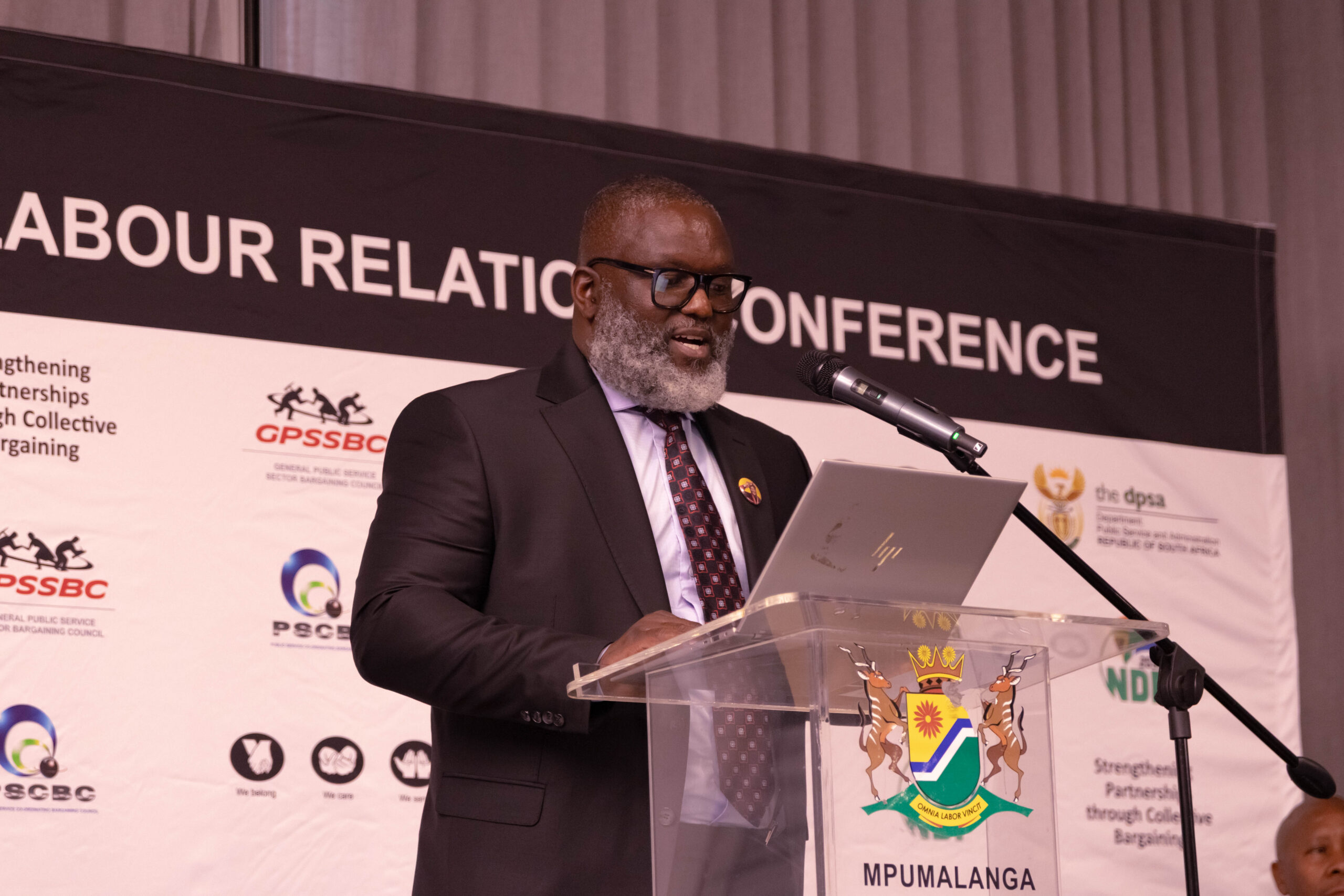
The Minister delivered the keynote address on 16 September 2026 at the second National Labour Relations Conference, held at The Capital Hotel in Mbombela. He spoke to more than 250 delegates from national and provincial departments, organised labour and other stakeholders. The three-day conference was held under the theme “Building Labour Relations Capacity and Capabilities for the Realisation of South Africa’s Developmental State.” It was officially opened by the Premier of Mpumalanga, Mr Mandla Ndlovu.
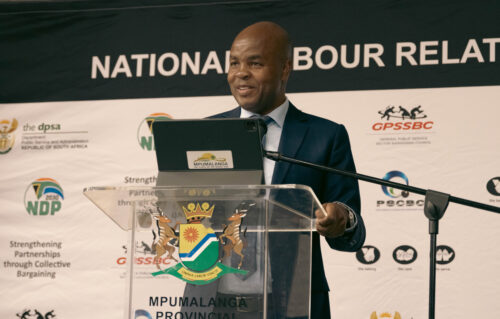
The Minister asked that public servants be understood as people, not as figures on a spreadsheet. “Here, I am not speaking about ‘human resources’ or ‘headcount’ or ‘the wage bill’. I am speaking about human beings,” he said.
He acknowledged the unseen effort behind public service, speaking of nurses who work long shifts, teachers who spend their own money on learners, and social workers who carry the weight of hundreds of cases. “No policy document has ever captured the weight you carry. No budget speech has ever calculated the hours you work beyond the clock,” he said.
He was direct about where public servants stand in the life of the nation: “You are not the problem of the state. You are the state… Without you, there is no National Development Plan. Without you, there is no government. Without you, there is no South Africa.”
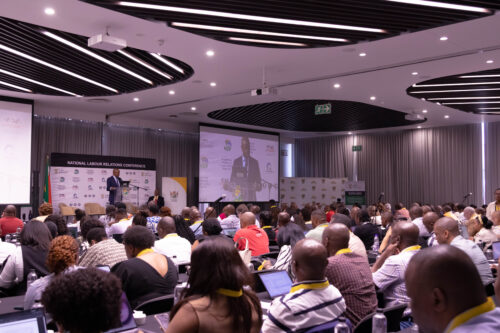
Public Service Month is observed under the theme “Professionalising the Public Service to Build Trust and Restore Confidence in Government.” The Minister made it clear that a caring state starts inside government. “If we truly want a public service that cares for our people, then we must first be a state that cares for its public servants,” he said.
The Minister outlined commitments that will shape the working environment across the Public Service:
Year-round dialogue with organised labour. Engagement will continue throughout the year, not only during wage negotiations or when industrial action is looming.
Stronger Employee Health and Wellness programmes. Employee wellbeing is recognised as central to good service delivery. The conference included a dedicated session on the state of wellness in the Public Service, with a focus on mental health.
A review of the Disciplinary Code. The aim is to reduce delays and dependence on costly external role-players, so that matters are resolved fairly and faster.
Building labour relations capacity. This includes addressing the juniorisation of the labour relations function, where posts across departments are increasingly filled at junior levels.
Managing digitalisation and artificial intelligence through social dialogue. Changes brought by new technology will be discussed with employees, not imposed on them.
The Minister also reaffirmed the government’s commitment to centralised collective bargaining through the Public Service Coordinating Bargaining Council (PSCBC) and sectoral councils.
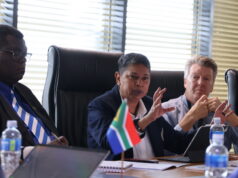
The conference assessed progress since the inaugural conference in 2024. Delegates heard inputs from all eight trade unions admitted to the PSCBC and from National Treasury on the economic outlook and the wage bill. They also engaged with the Judge President of the Labour Court, Judge Edwin Molahlehi.
Sessions covered:
- digitalisation and its implications for labour peace;
- managing disciplinary cases within the 90-day time frame;
- precautionary suspensions; and
- the future of collective bargaining in a constrained fiscal environment.
On the final day, the Acting Director-General, Mr Willie Vukela, presented the draft conference declaration. The Minister delivered the closing address, outlining how the conference’s work will move into implementation, monitoring, and impact assessment.
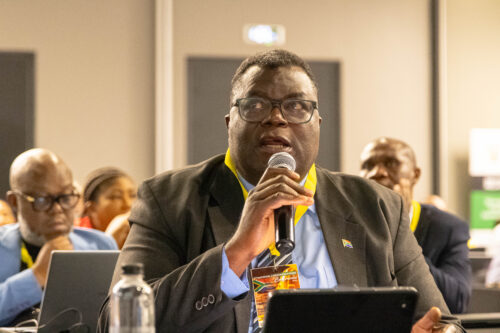
The Minister reminded delegates that citizens judge the Public Service by what they experience, not by agreements signed in boardrooms. “They measure it by whether the clinic is open when they are sick, whether there is a teacher in front of their child, and whether Home Affairs serves them with dignity.”
As Public Service Month continues, the Minister’s message is both recognition and a call to action: to serve with professionalism, integrity and care, and to keep the citizen at the centre of everything we do. “We choose engagement over enmity,” he said. “It requires that we put South Africa first.”
To every public servant who opens the clinic, teaches the class, processes the application or answers the call: thank you.