


Speeches
-
01 Jun 2026Opening keynote address by Minister for Public Services and Administration Inkosi Mzamo Buthelezi, MP at the Provincial annual extension and advisory services summit 2026
-
19 May 2026Budget vote speech of the minister for the public service and administration, Inkosi Mzamo Buthelezi, MP, “Transformative Change in Building a State That Works for Everyone”
-
19 May 2026Budget vote speech of the deputy minister for the public service and administration, Ms Pinky Kekana, MP, “Transformative Change in Building a State That Works for Everyone”
-
15 Sep 2025The annual Thusong week launch, Keynote address by Minister For Public Service And Administration, Inkosi Mzamo Buthelezi, MP
-
10 Sep 2025Welcome address - Public Protector Adv. Kholeka Gcaleka, Launch of public service month – Ethics management week – Leadership workshop
Media statements and notices
-
08 May 2026Media Statement by Minister Inkosi Mzamo Buthelezi on the Adjustment of the GEMS Contribution Increases for 2026
-
06 Dec 2025International Anti-Corruption Day 09 December 2025
-
01 Dec 2025Minister Buthelezi to Brief Media on Public Service Integrity and Anti-Corruption Measures
-
07 Nov 20255th APRM Youth Symposium: Youth in Governance - From Promise to Prosperity, Pan-African Parliament, Midrand, South Africa | 10-11 November 2025
-
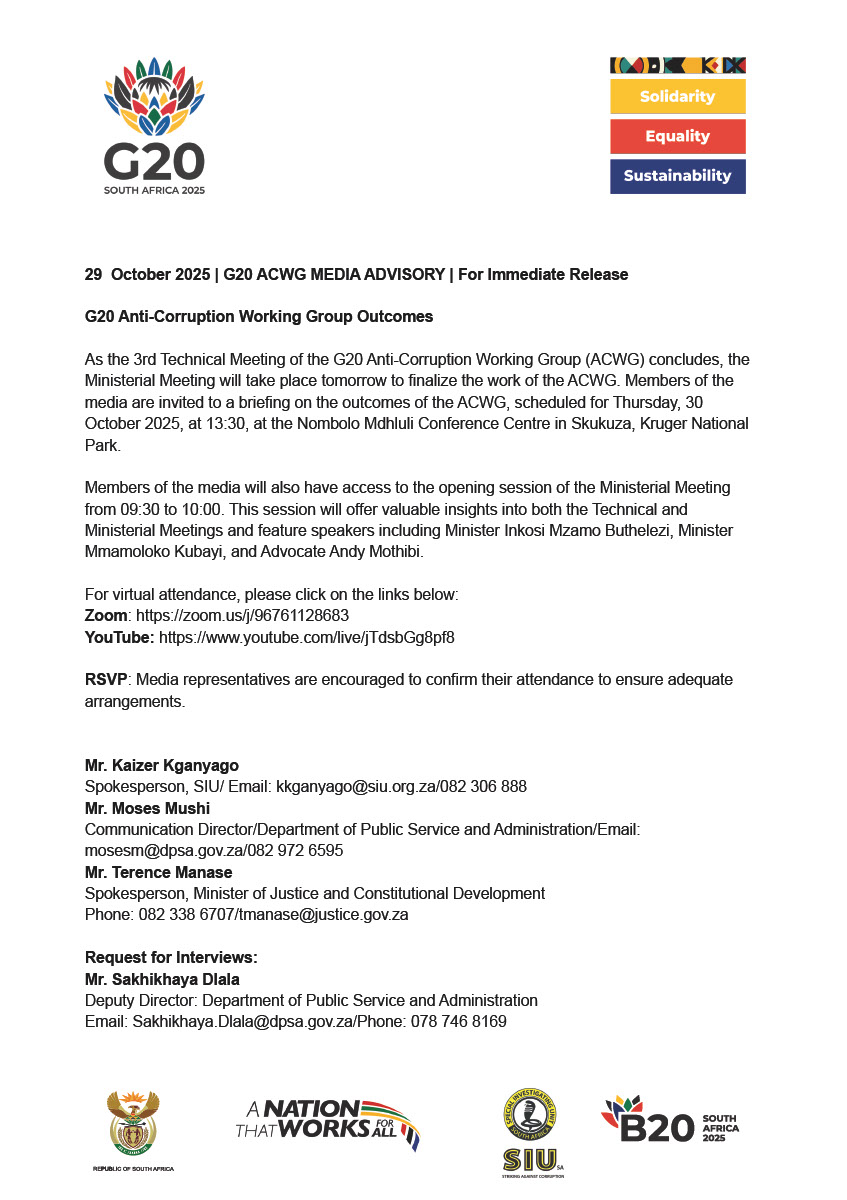
30 Oct 2025G20 Anti-gorruption working group outcomes
Policy updates
-
29 May 2026Conditions of appointment (including remuneration and other conditions of service) applicable to the members of the Public Service Commission, as determined by the President Dispensation for Public Service Commissioners
-
28 May 2026Dispensation for the appointment and remuneration of persons (Special advisers) appointed to executive authorities on grounds of policy considerations in terms of Section 12A of the public service act, 1994
-
27 May 2026Restructuring of the flexible component for SMS and MMS Members and those employees covered by OSDs
-
27 May 2026Improvement in conditions of service for Members of Senior Management Service: 1 April 2026
-
15 May 2026Newly appointed panel of service providers to deliver competency assessment services for senior management service in the public service
-
15 May 2026An interim arrangement for competency assessment services for senior management service in the public service
-
11 May 2026Addendum to circular 19 of 2026 and circular 21 of 2026: Implementation of transformation, inclusion and representation in the public service: National priorities
-
28 April 2026Interpretation and application of paragraph 14.7 of the determination and directive on leave of absence in the public service
-
16 April 2026Improvement in conditions of service for employees on salary levels 1 to 12 and those covered by occupation specific dispensations (OSDs): Cost of living adjustment: 1 April 2026
-
16 April 2026Restructuring of the flexible component for mms members due to the implementation of cost-of-living adjustment for employees on salary levels 1-12 and employees covered by osds
Open tenders
-
No tenders are currently open